The Gym Vest, Reconsidered: How to Actually Pick One (And Why Most of Us Get It Wrong)
Walk into any gym in India between March and October and do a quick headcount. Sleeveless wins. Vests, sandos, stringers, cut-off tees that used to be full tees. The sleeve is optional here in a way it isn't in most of the world. And yet the vest is probably the least considered item in your gym bag. Most of us are still training in something that came in a three-pack, or a promotional tee with the sleeves hacked off, or a vest bought two years ago that has since turned a slightly different shade of grey than it started. That's not a crisis. A vest is a vest, and you can absolutely train in a cheap one. But if you're wearing the same garment four to six times a week for two hours a session, it's worth ten minutes of thought. Here's what actually matters.
First: what the sleeveless cut is genuinely doing for you
Three things, and it's worth separating the real from the marketed. Airflow. This one is basic physics. No fabric around your upper arms and armpits means less trapped heat and more surface area for sweat to evaporate. In an Indian summer, in a gym where the AC is more of a rumour than a fact, this is the difference between finishing your session and cutting it short. Shoulder mobility. Overhead press, snatch, pull-up, lat pulldown, dip. Anything where your arm travels through a big arc is affected by what's sitting across your delt. A sleeve seam that catches at the top of your shoulder is a small annoyance that you notice on rep nine, not rep one. Sleeveless removes the variable entirely. Seeing the muscle work. This gets mocked as vanity, and sometimes it is. But watching a contraction while you do it is a real feedback mechanism. The mind muscle connection isn't a bodybuilding myth, and if it helps you actually recruit the muscle you're trying to train, that's a legitimate reason. What a vest is not doing: making you stronger, improving your recovery, or burning more calories. Any brand that implies otherwise is selling you a story. It's a shirt. A good one just gets out of the way.
Fabric: the actual decision
Almost every vest you'll see falls into one of three buckets, and each is genuinely better at something. 100% cotton. Soft, cheap, breathable, feels great for the first twenty minutes. The problem is that cotton absorbs sweat and holds it. By your third set of heavy squats it's wet, heavy, sticking to your back, and it will still be damp two hours later. In high humidity or during monsoon, a cotton vest may not dry properly overnight, which is where that stale smell comes from. Cotton is excellent for rest days, walking to the gym, lounging. It's a poor choice for a hard leg session in June. Polyester and nylon blends. These wick, meaning they move moisture to the outer surface where it can evaporate instead of soaking in. They dry fast, they're light, they hold their shape. The trade-off is that cheap polyester traps odour badly, because bacteria thrive on synthetic fibres. If you've ever pulled a performance vest out of the cupboard that smelled fine when you put it away and terrible when you took it out, that's why. Quality of the knit matters enormously here. Not all polyester is the same polyester. Seamless knits. The newer category, and the one worth understanding. Instead of cutting flat panels and stitching them together, the garment is knitted in the round as a single tube, with the structure (ribbing, mesh, stretch zones) built into the knit itself. Fewer seams means fewer places to chafe and less bulk. It also means fabric density can vary across the garment: tighter where you want the fit held, more open where you want air. It costs more to make, and it costs more to buy. Practical rule: if you sweat heavily or train in a gym without air conditioning, go synthetic or seamless. If you want something to throw on for a light session and a coffee after, cotton is fine and cheaper. Most people who train seriously end up owning both.
Fit: where more vests fail than fabric
Fabric gets all the marketing. Fit is what actually decides whether you wear the thing. Armhole depth. This is the single biggest variable in a vest and nobody talks about it. Too shallow and you've lost the mobility benefit you bought it for. Too deep, as in the full stringer cut, and half your torso is exposed. That's a legitimate style choice, but not one that works in every gym, and definitely not one that works if you plan to wear it anywhere else. A moderate armhole that clears your delt without dropping to your ribs is the versatile middle ground. Length. It should still cover your waistband when your arms are overhead. Test this in the trial room, not in the gym. A vest that rides up during pulldowns is a vest you'll spend the session tugging at. The see-through problem. Lightweight fabrics get translucent when wet. Stretch a section over your hand under a light and check before you commit, especially in white, grey, and any light solid. Nobody tells you this and everybody learns it the hard way. The neckline. A neckline that plunges to mid chest reads as one specific thing, and it isn't "I'm here to train." Higher is more versatile.
The India specific stuff
A buying guide written abroad doesn't account for the things that decide this here. Drying time is a real constraint. If you train six days a week and your vests take a full day to dry on a balcony in July, you either need more of them or you need faster drying fabric. Quick dry isn't a luxury feature in a monsoon climate. It's the whole point. Sweat behaves differently in humidity. High humidity means sweat evaporates slower, so it sits on your skin and in your clothes. Wicking matters more here than it does in a dry climate. Sizing is inconsistent across brands. Indian activewear sizing has no real standard. An L from one brand is an M from another. Always check the actual measurements on the size chart against a garment you already own and like, rather than trusting the letter. Wash cycle reality. Most of us wash gym clothes in a machine with everything else, often in hot water. That's what kills elastane. Cold wash, no fabric softener (it coats the fibres and destroys wicking), air dry. This will roughly double the life of anything technical you own.
Where our own vests sit in all this
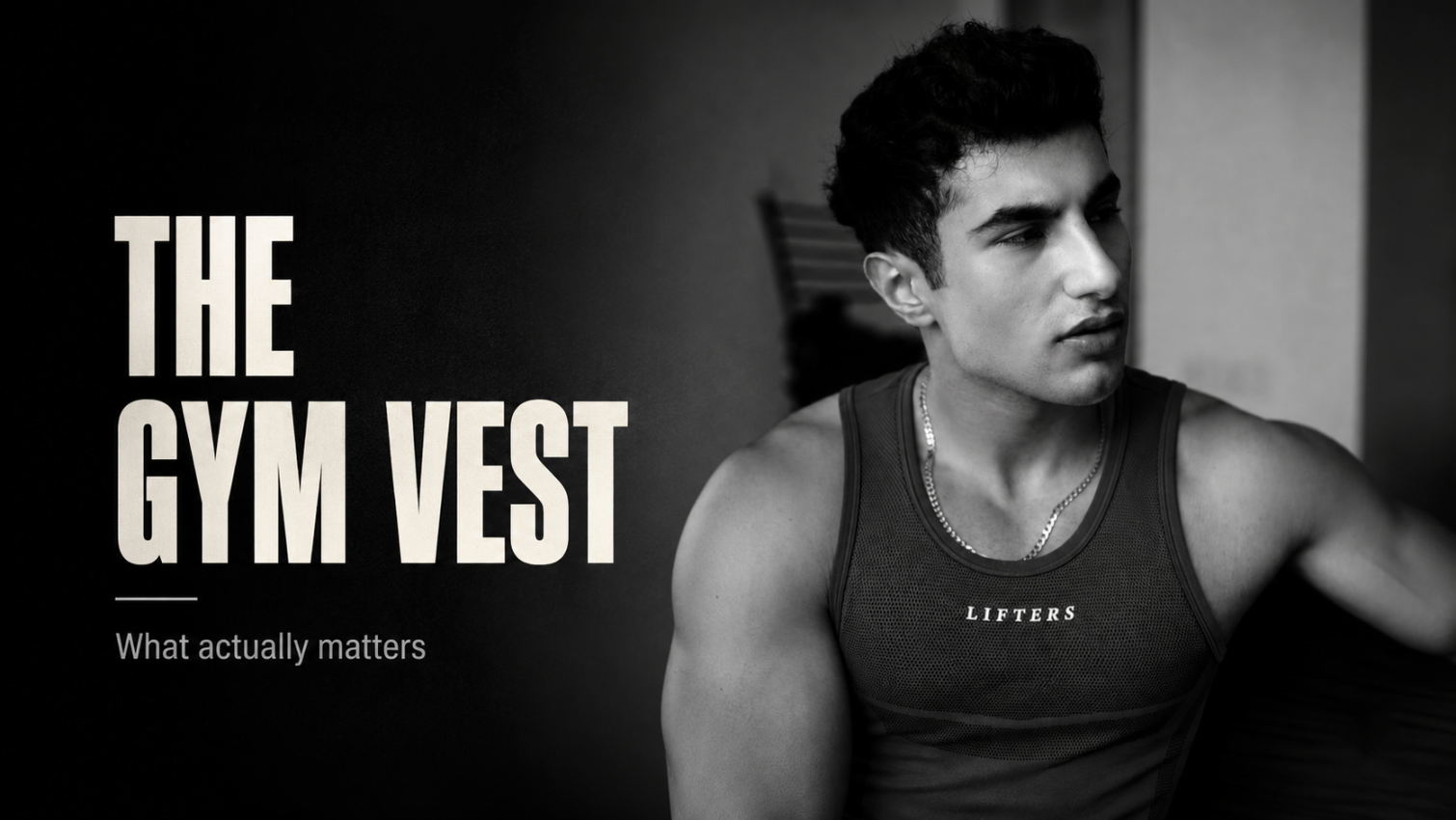
We make two sleeveless options. They're built for different jobs, and being clear about that is more useful than claiming both are perfect. The Flex Seamless Vest is the one built for hard training. It uses wrap knit construction, knitted cylindrically rather than cut and sewn, so there are minimal seams and very little bulk. Ventilation mesh isn't stitched on as panels, it's knitted directly into the fabric in the zones where you overheat first. The fit sits close and locked in, so it moves with you instead of shifting around mid set. If you prefer a loose, draped silhouette, this isn't it. A close fit is only comfortable if you actually like a close fit. The Lifting Club Tank is the relaxed cut, and for a lot of people it's the better pick. Looser through the body, more forgiving, works as easily off the gym floor as on it. If your training is moderate, or you just want something that doesn't announce itself, start here. Both are listed with full measurements. Measure a vest you already own and compare before you pick a size.
Most of the decision comes down to two things: the climate you actually train in, and the fit you'll actually wear. Get those right and almost any decent vest will serve you well, including ones we don't make.
-
October 26th, 2026
-
What to Wear for Home Workouts: Gym Clothes That Work in Your Living Room
October 23rd, 2026