How Many Gym T-Shirts Do You Actually Need?
Open your drawer. Count the gym t-shirts. Now count the ones you've worn in the last month. For most people the first number is somewhere north of ten and the second is three or four. The rest are event tees, gifts, impulse buys in a colour you don't like, and that one shirt with the giant chest print you bought during a phase. There's a reason this happens, and there's a better way to do it.
Why you keep buying and keep wearing the same four
You don't rotate randomly. You reach for the same shirts because they've quietly passed a test the others failed they fit right, they don't chafe, they don't look bad wet, and you don't have to think about them. That's the whole checklist. Everything else in the drawer failed at least one of those points, which is why it stays folded. The mistake isn't owning too many shirts. It's owning too many different shirts buying variety when what you actually need is repetition of the thing that works.
The number: five to seven
Assuming you train four to six days a week and do laundry once or twice, five to seven performance tees covers you completely. Here's the maths. Six training days, laundry every five to six days, plus one shirt in reserve for the day the wash doesn't happen on schedule. That's it. Beyond seven, you're not adding utility you're adding drawer clutter and decision fatigue. The catch: those five to seven need to be good. A rotation only works if every shirt in it is one you'd actually reach for. Seven mediocre tees is worse than four excellent ones, because you'll still only wear four and now you've spent more.
What the rotation should look like
3–4 in neutrals. Taupe, stone, olive, charcoal. These are your workhorses. Neutrals hide sweat better than black or white, they photograph well if you're logging progress, and they pair with any shorts or joggers you own without thought. 1–2 in black. Still useful black reads sharp and works when you're going straight from gym to somewhere else. Just don't make it your whole drawer. Black shows salt residue after heavy sessions and gets hot in direct sun. 1 you don't mind ruining. Deadlift days, chalk, outdoor conditioning, anything messy. Having a designated beater means your good shirts stay good. That's it. No event tees. No shirts you're keeping out of guilt.
What to actually buy
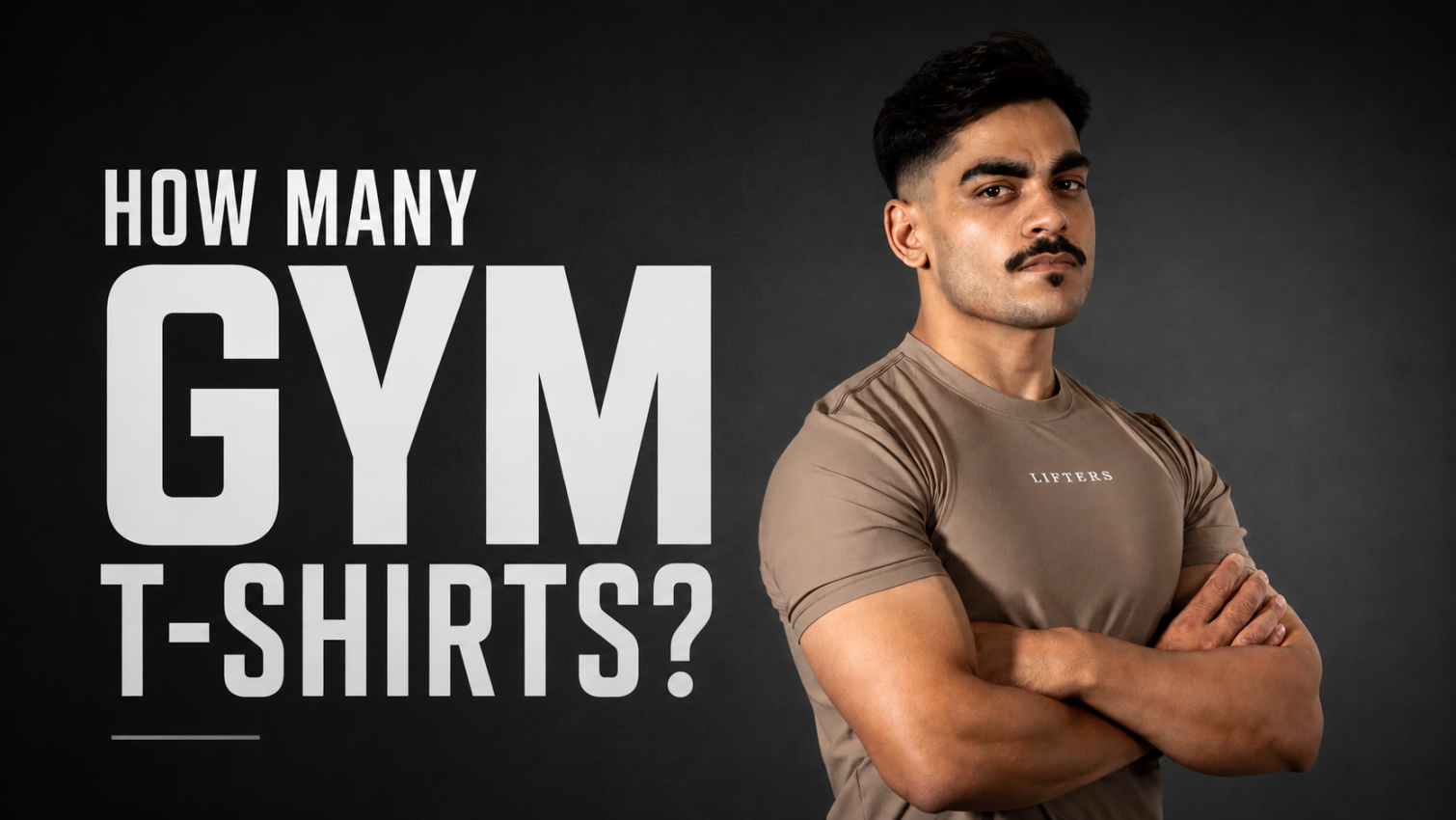
If you're rebuilding a rotation, the logic is simple: find one tee that works and buy it several times. This is why we built our Performance Tee as a range rather than a one-off. Same lightweight technical knit, same athletic fit through the chest and shoulders, same minimal chest logo across a neutral palette designed to work together. Taupe, and the rest of the summer range alongside it. The point isn't variety for its own sake. It's that once you've found a fit and fabric that disappears while you train, the sensible move is to stop hunting and just stock it. Your drawer gets simpler, getting dressed takes zero thought, and everything matches everything.
What to stop buying
Oversized graphic tees for actual training. Fine for walking around. Under a bar, a large plastisol print is a non-breathing panel across your chest, and oversized cuts bunch up during pressing and pulling. Anything you're not sure about the fit of. "It'll be fine" shirts are how drawers fill up. If you're hesitating in the cart, you already know. Cotton, for summer training. Covered this at length elsewhere, but briefly: it absorbs sweat and holds it, gets heavy, and stops breathing exactly when you need it to. Duplicates of a shirt you only like. Only bulk-buy the ones you love. There's a real difference and you know which is which.
Clearing out the ones that don't make it
Once a shirt is out of rotation, it's out. Be direct about it:
- Stretched collar or lost shape → out
- Permanent odour that survives washing → out
- Fit you've been tolerating for six months → out
- Haven't worn it since last year → out
Old cotton tees make genuinely good rags or car-cleaning cloth. Anything still wearable, donate. The goal is a drawer where every single option is one you'd happily pull on.
The actual benefit
This isn't about minimalism as an aesthetic. It's about removing a small daily decision. When every shirt in the drawer works, you stop thinking about what to wear to the gym. You grab, you go, and your attention goes to the session instead. Small thing, but it's one less bit of friction between you and getting under the bar. Five to seven shirts. All good ones. Done. [Shop Performance Tees →]
-
October 26th, 2026
-
What to Wear for Home Workouts: Gym Clothes That Work in Your Living Room
October 23rd, 2026